Blink Tattoo Platform · Beauty & Wellness / SaaS
Booking infrastructure for Modern Tattoo Studio's
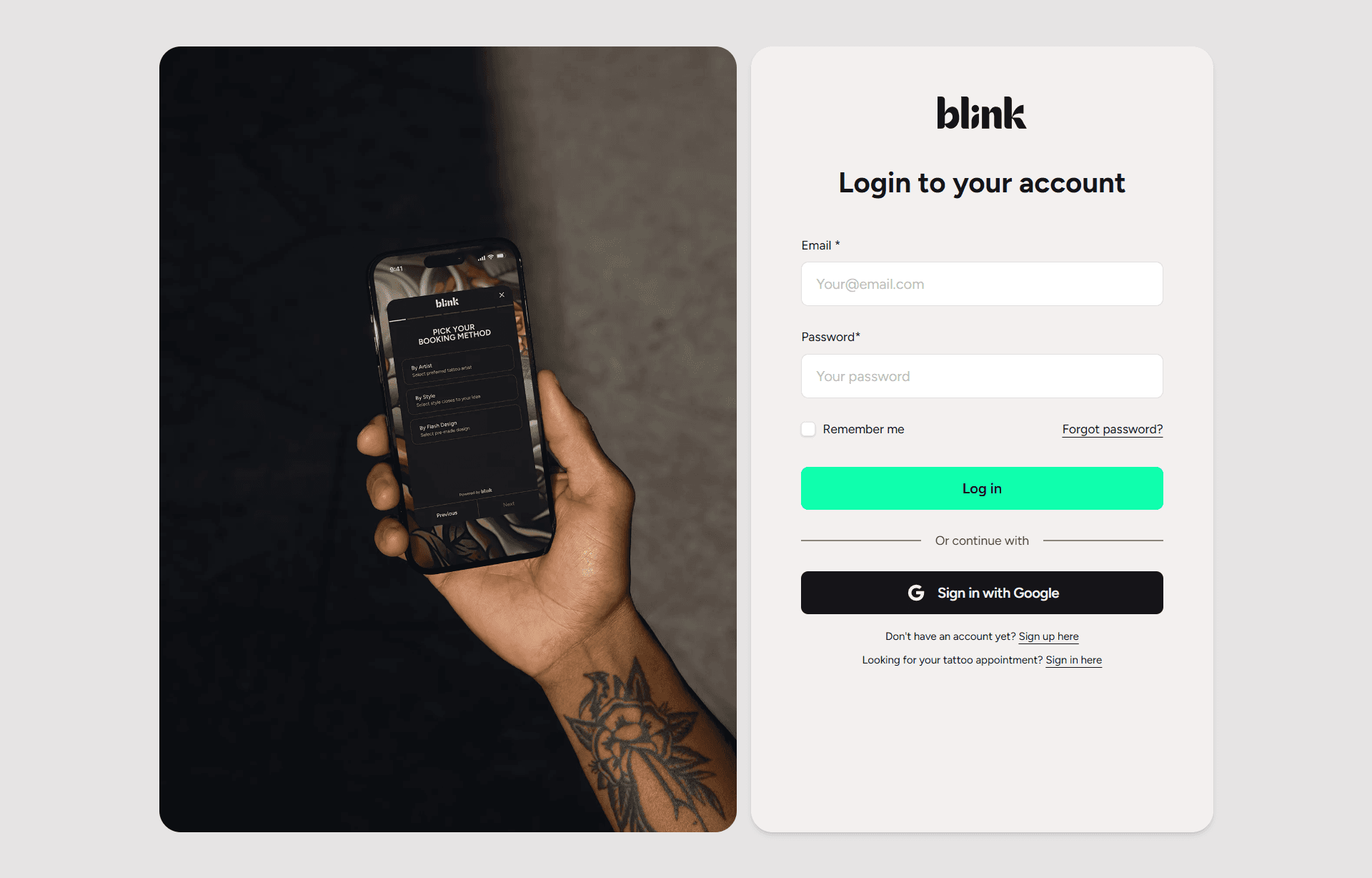
We built a multi-tenant booking platform for Blink Tattoo Platform that gives studios full control over scheduling, payments, and client communication in one owned system. The product was developed with Laravel 10, React 18, TypeScript, Inertia.js, MySQL, and Stripe Connect, using an event-driven architecture that synchronizes studio operations in real time across calendars, payments, and notifications without relying on fragmented third-party workflows.
The Challenge
Tattoo studios were losing revenue and time to manual booking work. Scheduling lived across DMs, phone calls, spreadsheets, and disconnected calendars, which created double bookings, delayed responses, missed deposits, and inconsistent client communication. Blink needed a system that could turn a messy service workflow into reliable operational infrastructure that studios could actually scale.
Key questions:
- How do we eliminate manual scheduling overhead? — Artists and studio teams were spending too much time going back and forth with clients just to confirm availability and lock in appointments.
- How do we prevent calendar conflicts in real time? — Without a dependable sync layer, bookings could collide with existing availability, reschedules, or external calendar events.
- How do we secure commitment before an appointment is confirmed? — Deposits needed to be collected automatically to reduce drop-off, improve cash flow, and cut no-shows.
- How do we keep clients informed without adding admin work? — Studios needed branded communication across email, SMS, and WhatsApp-style flows without manually managing every message.
- How do we support multiple studios and artists without platform chaos? — The product had to scale across locations, teams, and branding setups while keeping tenant data, workflows, and permissions fully isolated.
Our Approach
We designed Blink as a full-stack SaaS platform built on Laravel and React via Inertia.js, giving the client a fast product experience without splitting logic across separate frontend and API stacks. The architecture focused on ownership, automation, and reliability: booking state, payment state, calendar state, and communication state all live in one coherent system.
Workflow engine: We mapped the full appointment lifecycle into a structured status flow from request to completion, so studios could standardize how bookings move, who acts next, and when payment or communication is triggered.
Real-time scheduling logic: We implemented bidirectional Google Calendar synchronization, conflict detection, availability handling, and reschedule logic so calendar accuracy became a system guarantee rather than a manual task.
Payment orchestration: Stripe Connect was integrated to support deposits, secure checkout sessions, platform fee handling, and payment state tracking for multi-studio operations.
Owned client access: Instead of forcing account creation, we generated secure token-based customer access to personal booking dashboards, reducing friction while keeping the experience private and controlled.
Multi-tenant foundation: Each studio operates within its own isolated environment for data, branding, team permissions, and communication templates, allowing Blink to scale the product without introducing lock-in or operational cross-contamination.
Metrics
-75%
Booking Admin Time
Studios reduced the time spent on manual scheduling, follow-up, and appointment coordination.
+60%
Deposit Conversion
More clients completed deposit payments online because payment was embedded directly into the booking flow.
-40%
No-Shows
Automated reminders and confirmation logic significantly reduced missed appointments.
+50%
Artist Capacity
Better scheduling visibility and conflict prevention increased the number of bookable appointments per artist.
Multi-tenant
Studios Supported
The platform was built to support multiple studios, artists, locations, and branded workflows in one shared product architecture.
Operational Software That Turns Booking Into a Scalable Asset
Blink is more than a booking interface. It is a studio operations platform that converts fragmented administrative work into a repeatable, auditable, and monetizable system. By centralizing scheduling, deposits, communication, documentation, and customer context, the platform gives tattoo studios a workflow they can own and grow on top of.
A frictionless booking flow for clients
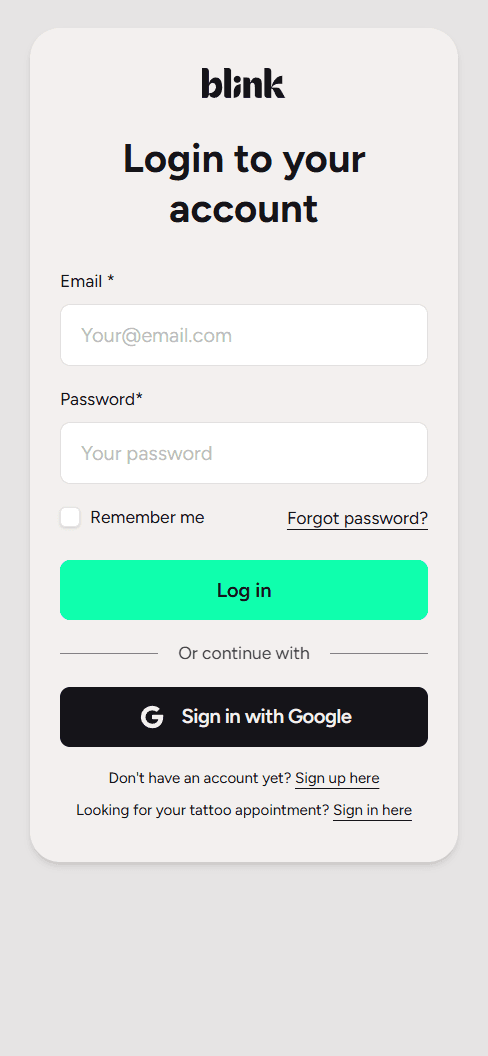
The booking journey starts through an embedded widget or a dedicated studio booking page. After submission, the system generates a secure access token that lets the customer open a personal dashboard without creating an account. That removes a major point of friction while still protecting access to booking details, selected time slots, payment actions, and status updates.
Because the system controls the entire flow, each step can trigger the next with clear logic. A client request becomes a structured record, not an inbox message. That makes the process faster for studios and more trustworthy for customers.
Calendar logic that holds up under real-world changes
Scheduling was one of the most business-critical parts of the platform. We implemented bidirectional Google Calendar sync so confirmed bookings appear automatically in the artist's calendar, while changes in availability can be reflected back into the platform. This reduced duplicate work and lowered the risk of conflicting appointments.
More importantly, we built the underlying logic to handle edge cases: reschedules remove the old event and create a new one, artist reassignments move ownership correctly, and cancellation flows can trigger cleanup actions. With proper locking around sync operations, Blink avoids race conditions that commonly create duplicate or stale events in calendar-integrated systems.
Deposit collection built into the booking lifecycle
Once a client selects a proposed time slot, the platform creates a Stripe Checkout Session for the required deposit. That ties payment directly to the booking state, which means confirmation only happens when the commercial commitment is in place. Studios get a cleaner workflow, better payment conversion, and less manual follow-up.
We also built logic around session expiry, payment status tracking, and Connect-based multi-party flows. This matters in a marketplace-style product, where payment infrastructure has to work not just for one studio, but across many tenants with different payout and fee requirements.
Communication that scales without more admin
Blink includes a template-based notification system for transactional communication across email and SMS, with room for WhatsApp-style communication flows where needed. Studios can send confirmations, reminders, payment prompts, and status updates automatically, while keeping the messaging aligned to their own branding.
This is where operational value becomes very tangible: fewer missed messages, fewer no-shows, and less time spent manually answering repetitive booking questions. Communication becomes part of the product logic rather than an afterthought.
Studio tooling beyond appointments
The platform also supports features that matter in day-to-day tattoo operations, including flash tattoo listings with sold-state tracking, an Ink Passport for tattoo documentation, digital waiver signing with PDF storage, and studio-level CRM views. These additions turn Blink from a scheduler into a more durable operational system.
Each action is logged through audit trails, giving studios and platform operators visibility into who changed what and when. That improves accountability and makes the product more defensible as a serious SaaS platform.
Multi-tenant by design, not as an afterthought
From the start, Blink was structured as a multi-tenant application. Studio data, branding, users, communications, and business rules are isolated per tenant, while the shared platform retains control over common infrastructure and product evolution. This lets Blink onboard more studios without compromising reliability or data boundaries.
That architectural choice creates long-term value: the client owns the platform logic, owns the operating model, and can keep compounding product capability without being boxed into external tools or brittle one-off integrations.
Architecture
- Laravel 10 powers the core domain logic, booking workflows, tenant-aware business rules, and event-driven processes across scheduling, payments, and notifications.
- MySQL stores multi-tenant operational data with optimized indexing for booking lookups, status filtering, calendar queries, and customer history.
- Model Observers are used to trigger side effects such as sync actions, notification events, and workflow transitions when booking records change.
- Spatie Activity Log provides audit trails for operational accountability across studio actions, customer changes, and admin events.
Frontend
- React 18 delivers interactive dashboard experiences for studio staff, artists, and customer booking flows.
- TypeScript improves maintainability and reduces UI-state errors in complex flows such as slot selection, payment states, and tenant-specific interfaces.
- Inertia.js enables an SPA-like experience without the duplication and maintenance overhead of a separate API-first frontend stack.
- Tailwind CSS and shadcn/ui support a fast, consistent interface system for dashboards, forms, filters, and responsive booking views.
Integrations
- Stripe Connect manages deposits, studio-level payment routing, platform fees, checkout sessions, and webhook-driven payment state updates.
- Google Calendar API handles bidirectional synchronization of confirmed bookings, availability changes, cancellations, and event reassignment logic.
- Mailgun is used for transactional email delivery including confirmations, reminders, and payment-related communication.
- Twilio supports SMS notifications for time-sensitive booking updates and reminders.
Reliability & Performance
- Calendar sync locking prevents duplicate Google Calendar events and race conditions during rapid booking changes or concurrent updates.
- Checkout expiry recovery detects expired Stripe sessions and generates replacement payment flows without breaking the booking journey.
- Timezone normalization aligns client timezone, server timezone, and Google Calendar timezone handling to keep slot logic accurate across regions.
- Sentry provides monitoring and error tracking across production flows so issues can be identified before they become operational failures.
Security
- Token-based customer authentication gives clients secure access to their booking dashboard without requiring password-based accounts.
- Laravel Sanctum protects authenticated application interactions with CSRF-aware session security.
- Stripe webhook verification ensures payment events are trusted before updating booking or payout states.
- Role-based access control restricts actions by studio member role, keeping sensitive financial and operational functions properly scoped.
“We wanted more than a booking tool. We needed a system that could take real operational pressure off studios and make the entire client journey feel professional from first request to confirmed appointment. Blink gave us that foundation, and the impact on admin time and booking flow was immediate.”
Blink Tattoo Platform — Studio Owner
More case studies
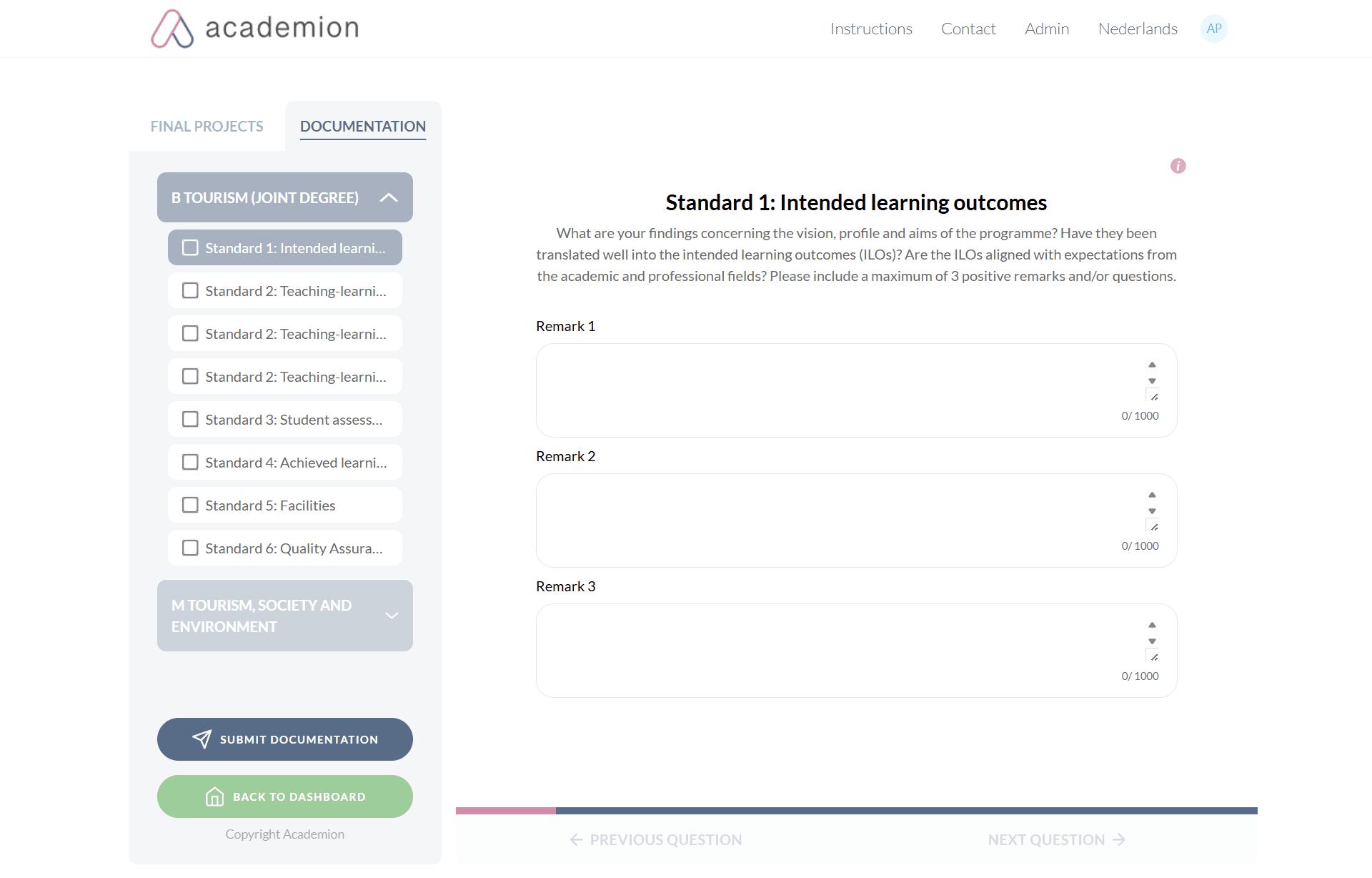
From Excel to Platform for Academic Research Operations
We designed and built a custom research operations platform for Academion, replacing fragile Excel-based workflows with an owned web application for academic institutions. Built with Laravel, Vue.js, Inertia.js, PostgreSQL, Laravel Nova, and Tailwind CSS, the system centralizes survey management, participant tracking, reporting, and administration in a scalable architecture that captures operational knowledge inside the product itself.
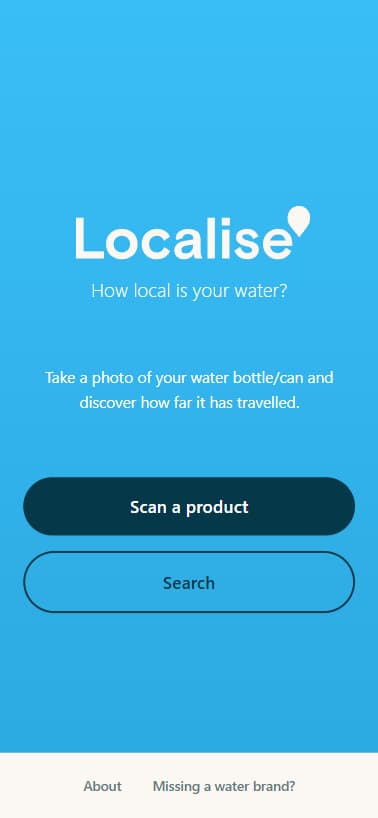

AI-Powered Water Brand Scanner for Supply Chain Awareness
We built Localisewater, as a mobile-first web application for SEA Water / Localise that turns a bottle photo into a clear view of where that water came from and how far it travelled. Built with Next.js 16, React 19, TypeScript, Prisma, MySQL, and OpenAI GPT-4o Vision, the platform combines AI label recognition, a curated brand database, and geolocation-based distance calculation in an architecture the client fully owns and can extend without platform lock-in.