Academion · Academic Research & Education
From Excel to Platform for Academic Research Operations
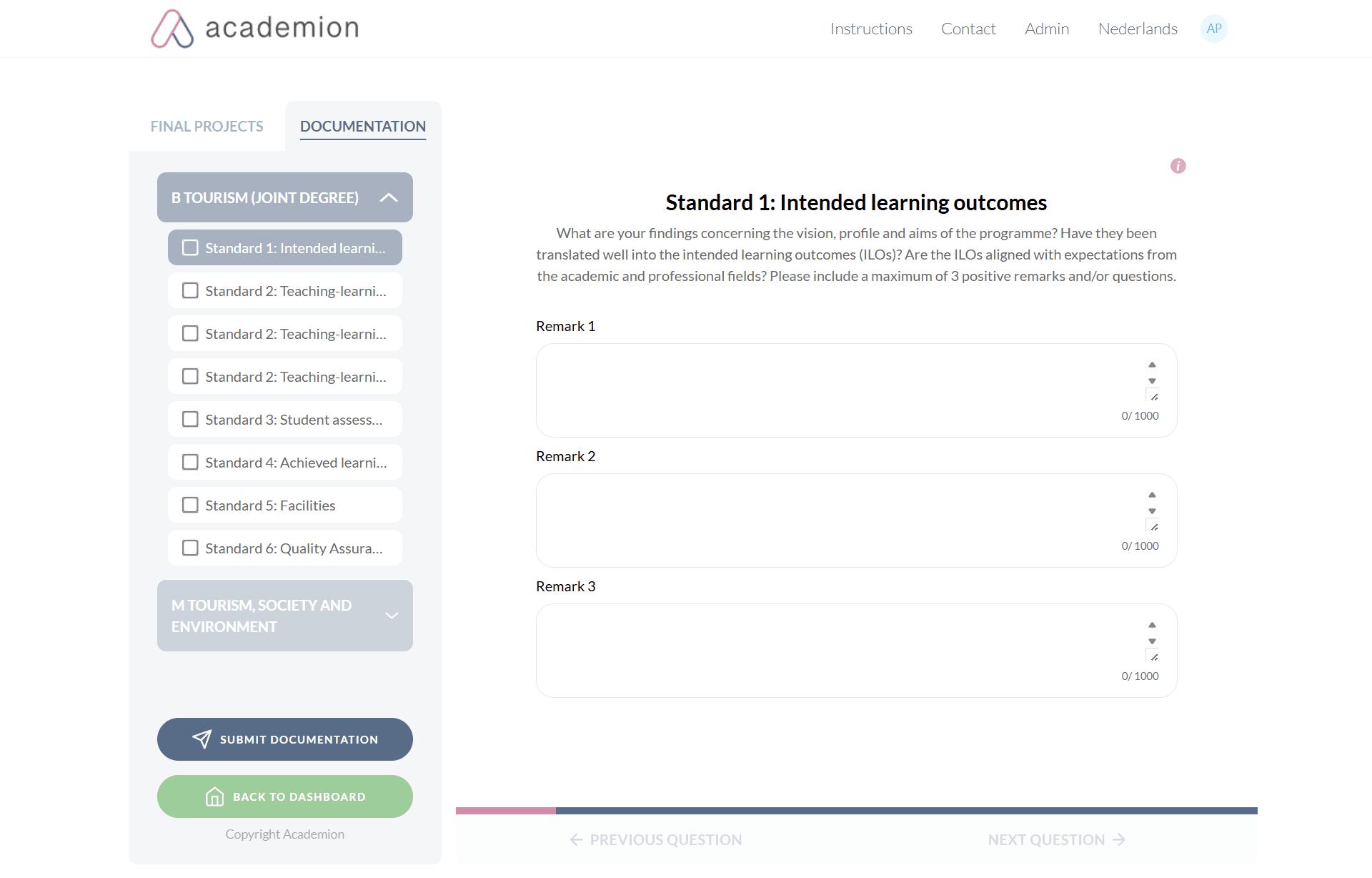
We designed and built a custom research operations platform for Academion, replacing fragile Excel-based workflows with an owned web application for academic institutions. Built with Laravel, Vue.js, Inertia.js, PostgreSQL, Laravel Nova, and Tailwind CSS, the system centralizes survey management, participant tracking, reporting, and administration in a scalable architecture that captures operational knowledge inside the product itself.
The Challenge
Academion was running complex research workflows through Excel spreadsheets, formulas, macros, and manual coordination. That setup worked until scale, staff turnover, and process complexity started creating delays, transcription errors, and heavy dependence on individual team members who knew how the system worked.
Key questions:
- How do you turn spreadsheet logic into a reliable platform? — The existing process contained years of operational know-how, but it lived inside files, tabs, formulas, and personal workarounds rather than in a maintainable system.
- How can coordinators save time without losing control? — Administrative tasks like invitations, response tracking, exports, and reporting consumed hours every week and slowed down actual research work.
- How do you reduce errors in participant and survey data? — Manual copy-paste flows and fragmented tools introduced avoidable mistakes that affected data quality and confidence in outputs.
- How can the operation scale across institutions? — A process dependent on spreadsheets and key personnel cannot support significantly more participants, researchers, and studies without adding overhead.
- How do you retain knowledge when staff changes? — Academion needed the logic, rules, and workflows to live in the product so onboarding and continuity would no longer depend on institutional memory.
Our Approach
We translated Academion’s operational workflow into a custom Laravel-based platform with a Vue.js interface, PostgreSQL data model, and Inertia.js application layer. The goal was not just digitization, but ownership: a system Academion controls end-to-end, with process logic embedded in software instead of hidden in spreadsheets.
Process Mapping: We started by shadowing coordinators, documenting real-world workflows, and identifying where data moved, where decisions happened, and where delays or errors were introduced. That gave us a clear blueprint for what needed to become system logic.
Workflow Productization: We converted recurring administrative tasks into structured platform features: survey creation, participant management, invitation flows, status tracking, reporting, and export generation. This turned ad-hoc operational effort into repeatable, scalable product behavior.
Admin Ownership: With Laravel Nova, we gave Academion a powerful internal administration layer for managing data, permissions, and configuration without developer dependency. The platform remains extensible while keeping day-to-day control with the client.
Scalable Data Architecture: We modeled the platform around research projects, participants, responses, documents, and outputs in PostgreSQL, creating a foundation that can support more institutions and more complex studies without breaking existing workflows.
AI-Assisted Features: In later phases, we added OpenAI-powered capabilities such as translation support to reduce manual content handling and improve operational speed while keeping the core research workflow under Academion’s control.
Metrics
+85%
Time Savings
Automated workflows reduced administrative tasks from 8 hours per week to 1 hour per week per coordinator.
-95%
Error Rate
Replacing manual data entry and spreadsheet handoffs virtually eliminated transcription and coordination errors.
5x
Scalability
The platform supports five times more participants without requiring proportional staff growth.
100%
Knowledge Retention
Operational know-how is now embedded in the platform, removing dependency on individual spreadsheet experts.
2 weeks → 2 days
Onboarding Time
New employees can learn the workflow through the system itself, dramatically shortening ramp-up time.
500+
Active Users
The platform serves researchers across multiple academic institutions in an ongoing production environment.
Turning research operations into owned software
Academion’s platform is a clear example of what happens when operational knowledge is treated as an asset rather than an administrative burden. We replaced a spreadsheet-heavy process with a structured application that gives researchers and coordinators a faster workflow, cleaner data, and a system they fully own.
From hidden spreadsheet logic to explicit system behavior
Before the platform, key workflows lived inside Excel sheets with layered formulas, macros, and manual instructions. That meant the process was technically functioning, but only for people who already understood its unwritten rules. We extracted that logic and rebuilt it as explicit product behavior with validated forms, state transitions, permissions, and automated triggers.
This shift matters commercially as well as operationally. Once logic is embedded in software instead of files, it becomes repeatable, auditable, and easier to scale across teams and institutions. Academion no longer depends on fragile handovers or personal spreadsheet expertise to keep the operation running.
Survey workflows built for real research coordination
The platform includes a custom survey builder tailored to Academion’s workflow, including configurable question types, conditional logic, and structured response handling. Instead of forcing the team into a generic third-party survey tool, we built around the way their research process actually works.
Because the survey layer sits inside the same application as participant management and reporting, there is no need for manual reconciliation between tools. Responses, status changes, and project data stay connected in a single source of truth, reducing friction and eliminating avoidable data handling errors.
Participant management that removes administrative drag
Coordinators needed more than a database of names. They needed a workflow engine for invitations, follow-ups, completion tracking, and oversight across multiple studies. We built a participant management layer that surfaces statuses clearly, supports filtering and operational actions, and keeps every project organized around the current stage of engagement.
That directly created time savings. Work that previously required checking spreadsheets, composing repetitive communications, and manually updating statuses was consolidated into a consistent interface with predictable logic. The result is less time spent on coordination overhead and more time available for actual research execution.
Reporting, exports, and document generation as product features
One of the biggest inefficiencies in the original process was the amount of manual work required after data collection. We addressed this by making exports and document generation part of the application itself, rather than a separate cleanup step. Structured output generation ensures that results can be produced quickly and consistently.
Technically, this required careful backend modeling and predictable data relationships so outputs could be generated from normalized records instead of hand-assembled files. For the team, the benefit is simple: faster turnaround, fewer errors, and much less dependence on individual staff members to interpret or prepare the data correctly.
An internal system designed for autonomy
Using Laravel Nova as the admin foundation gave Academion strong internal control over records, configuration, and operational oversight. This was important strategically: the platform had to support growth without creating a new dependency on developers for every small change.
That autonomy supports long-term value. New staff can understand the workflow through the product itself, administrators can manage the system without touching code, and Academion retains ownership over both the data and the business logic that drives its research operation.
AI as a practical accelerator, not a gimmick
In the later stages of development, we introduced OpenAI API integrations for targeted tasks such as translation support. The goal was not to add novelty, but to remove low-value manual effort in parts of the workflow that benefit from speed and consistency.
Because AI features were added into an existing controlled platform architecture, they operate within Academion’s own system rather than outside it. That preserves ownership, keeps the core process stable, and ensures new capabilities add measurable operational value instead of extra complexity.
Architecture
- Laravel powers the core application layer, business rules, workflow automation, and domain-specific logic that replaced spreadsheet formulas and macros.
- PostgreSQL stores structured research data across projects, participants, responses, statuses, and generated outputs with a schema designed for long-term scalability.
- Inertia.js connects the Laravel backend and Vue.js frontend in a single application architecture, reducing API overhead while keeping interactions fast and maintainable.
Frontend
- Vue.js is used to build the dashboard, survey builder, participant management flows, and responsive interfaces for both coordinators and end users.
- Tailwind CSS provides a consistent design system for complex administrative screens, keeping the UI clean while supporting rapid iteration over a long product cycle.
- JavaScript handles interactive form behavior, conditional survey logic, and dynamic state changes throughout the application.
Administration & Operations
- Laravel Nova gives Academion an internal control panel for managing records, configuration, and operational oversight without relying on custom back-office tooling for every task.
- Custom workflow tooling centralizes invitation handling, completion tracking, export preparation, and process oversight inside one owned environment.
Automation & AI
- OpenAI API is integrated for translation-related support features that reduce repetitive manual work while staying embedded in Academion’s existing workflow.
- Backend automation replaces repetitive coordinator tasks with structured triggers and repeatable system actions, reducing both time cost and human error.
Maintainability & Scale
- PHP provides a mature and maintainable foundation for long-lived product logic that can evolve with Academion’s research operation.
- Modular data and feature structure allows the platform to support more institutions, more users, and more complex studies without rebuilding the core system.
“What we needed was more than a digital version of our spreadsheets. We wanted a system that captured how our team actually works, so we could scale without adding complexity. The result is a platform that saves us time every week and makes new team members productive almost immediately.”
Research Coordinator — Academic Research Manager
More case studies
Booking infrastructure for Modern Tattoo Studio's
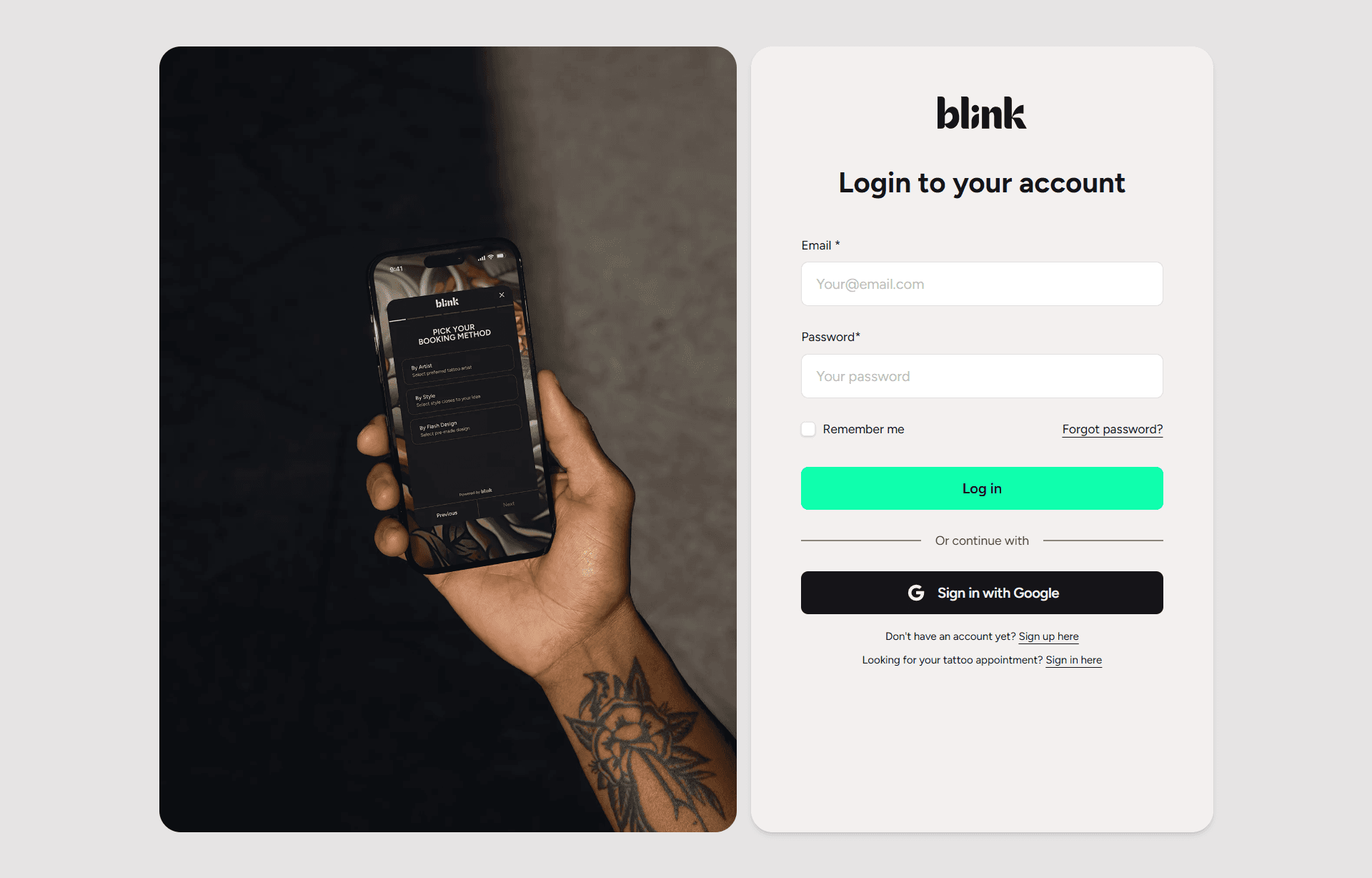
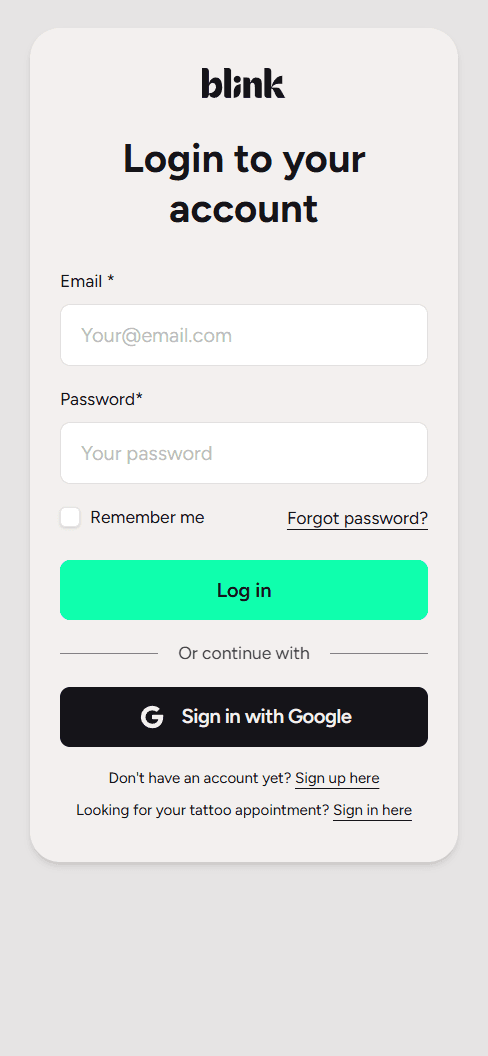
We built a multi-tenant booking platform for Blink Tattoo Platform that gives studios full control over scheduling, payments, and client communication in one owned system. The product was developed with Laravel 10, React 18, TypeScript, Inertia.js, MySQL, and Stripe Connect, using an event-driven architecture that synchronizes studio operations in real time across calendars, payments, and notifications without relying on fragmented third-party workflows.

AI-Powered Water Brand Scanner for Supply Chain Awareness
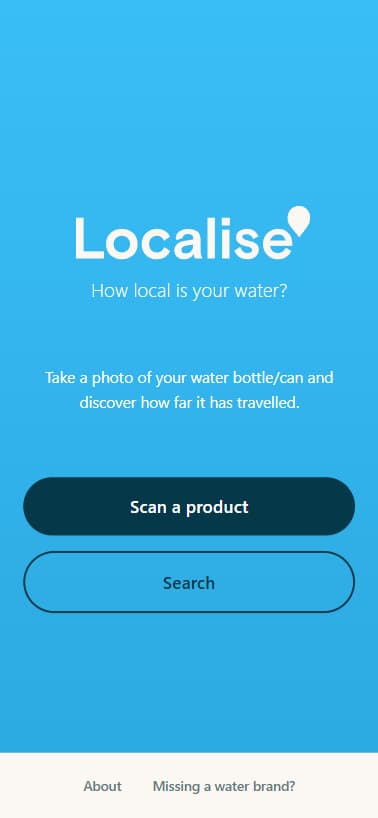
We built Localisewater, as a mobile-first web application for SEA Water / Localise that turns a bottle photo into a clear view of where that water came from and how far it travelled. Built with Next.js 16, React 19, TypeScript, Prisma, MySQL, and OpenAI GPT-4o Vision, the platform combines AI label recognition, a curated brand database, and geolocation-based distance calculation in an architecture the client fully owns and can extend without platform lock-in.